
ISO 9001-certified manufacturer of mechanical rebar splice systems and sonic tubes - powering India's most critical infrastructure projects.
Kridhan Infratech Pvt Ltd is an ISO 9001-certified manufacturer of precision-engineered steel products, headquartered in Mumbai, Maharashtra. We focus on engineering solutions that meet the demanding quality and performance requirements of modern construction - residential, commercial, and large-scale infrastructure alike.
Our two primary products - Mechanical Splice for Rebar (couplers) and Sonic Tubes - are trusted across India's first bullet train corridor, nuclear power plants, high-speed rail, and landmark construction projects throughout the country and internationally.

Be the most preferred & the choice of brand, that provides the value added & cost effective solutions to construction industry.

Six principles that guide every decision we make - from the factory floor to the project site. They're not aspirational; they're operational.
We operate with full transparency - in our pricing, processes, and partnerships. Honesty is the foundation every lasting business relationship is built on.
01We continuously challenge conventional methods - engineering smarter solutions that reduce cost, save time, and raise the bar for infrastructure quality.
02We embed ourselves at ground level with our clients - understanding site realities, anticipating challenges, and delivering solutions that genuinely add value.
03Every product that leaves our facility is held to the same exacting standard - whether destined for a metro tunnel, a nuclear plant, or a landmark high-rise.
04Project timelines are non-negotiable in infrastructure. Our supply chain, inventory, and dispatch systems are engineered to deliver - every time, on time.
05We engineer for the long term - building products and practices that support resilient, future-ready infrastructure across India and beyond its borders.
06Kridhan Couplers are a Parallel Threaded Mechanical Splicing System for concrete reinforcement bars from 12mm to 40mm. Manufactured to IS 16172, ACI 318, and BS 8110. Raw material: C45 grade.
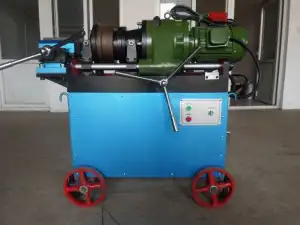
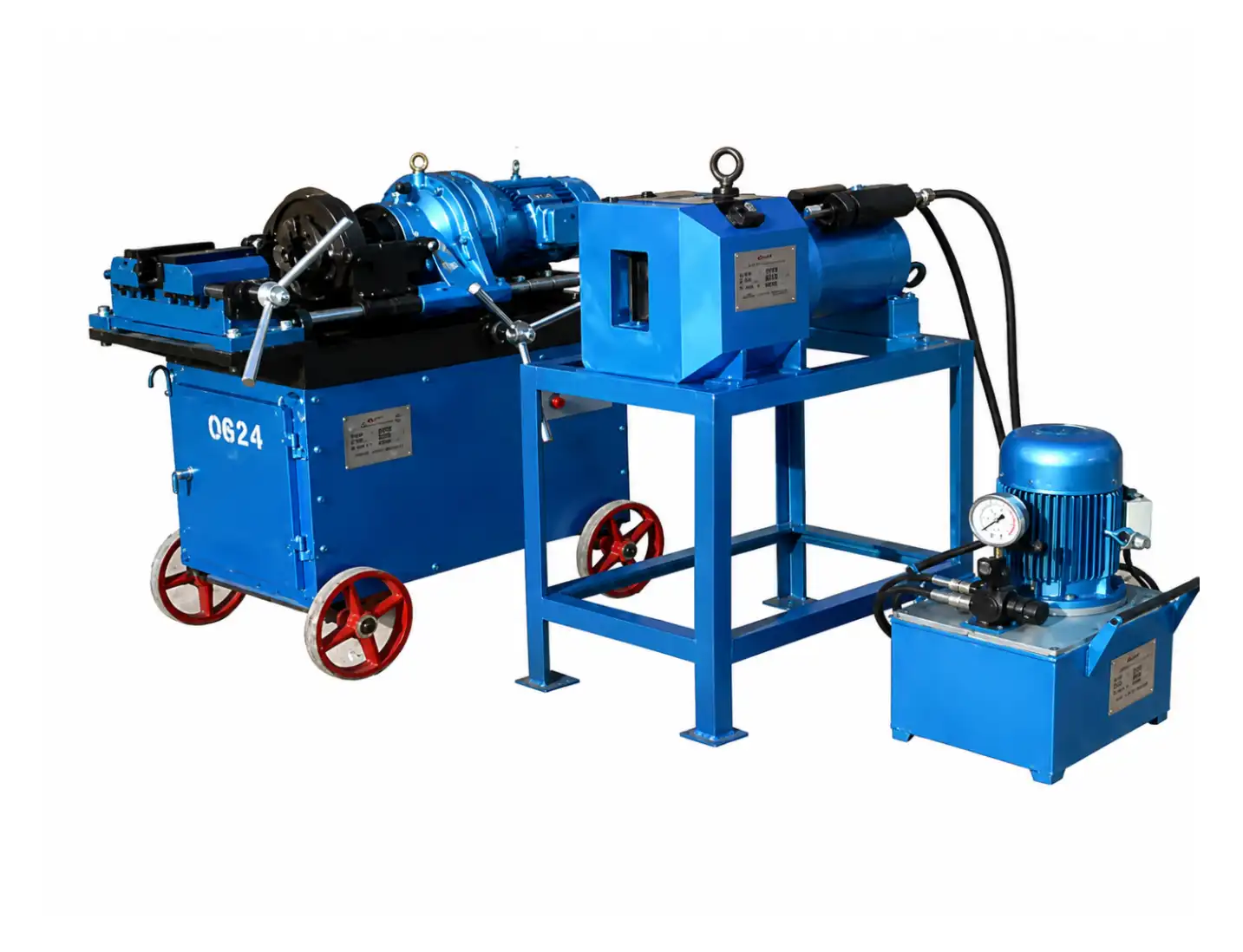
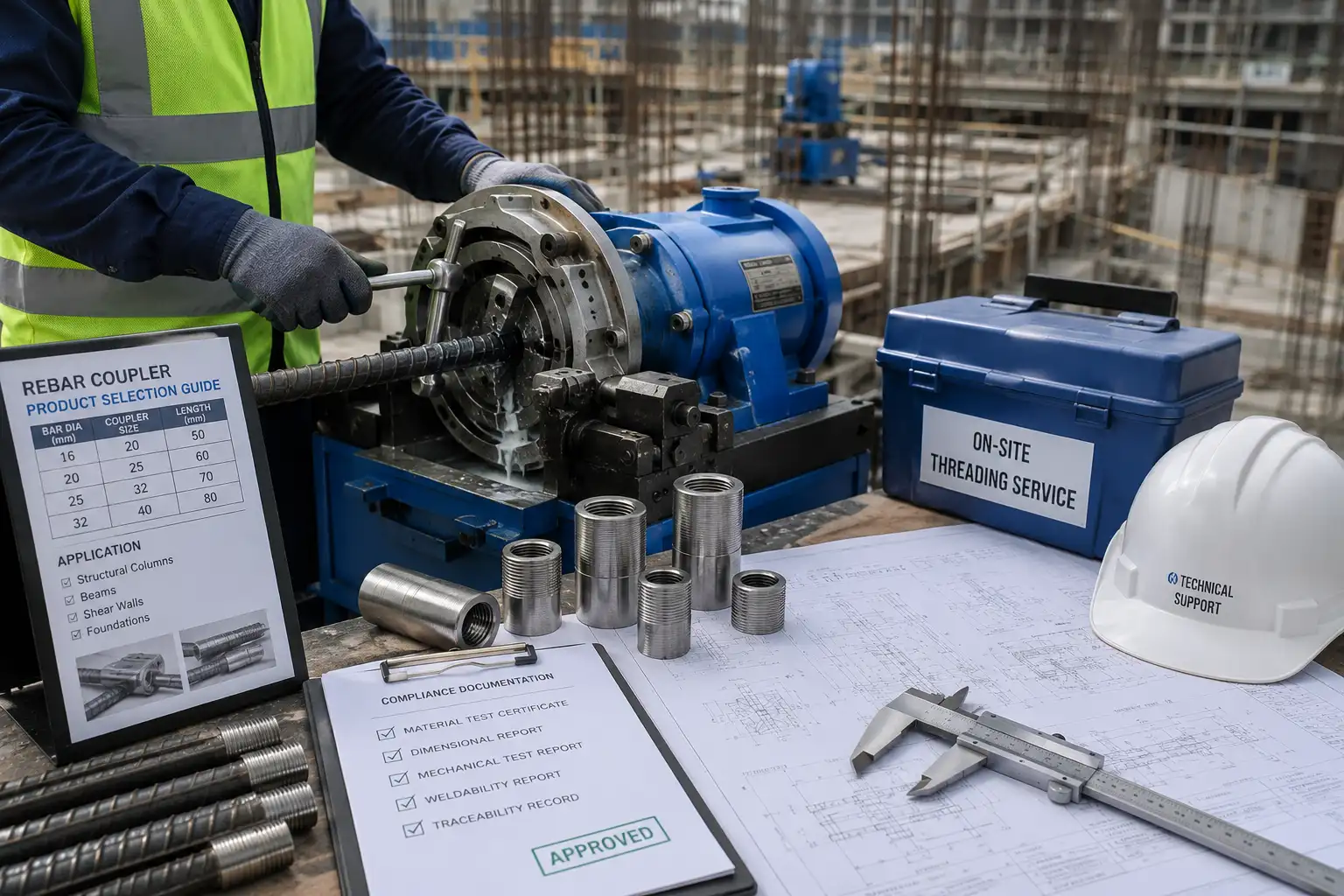
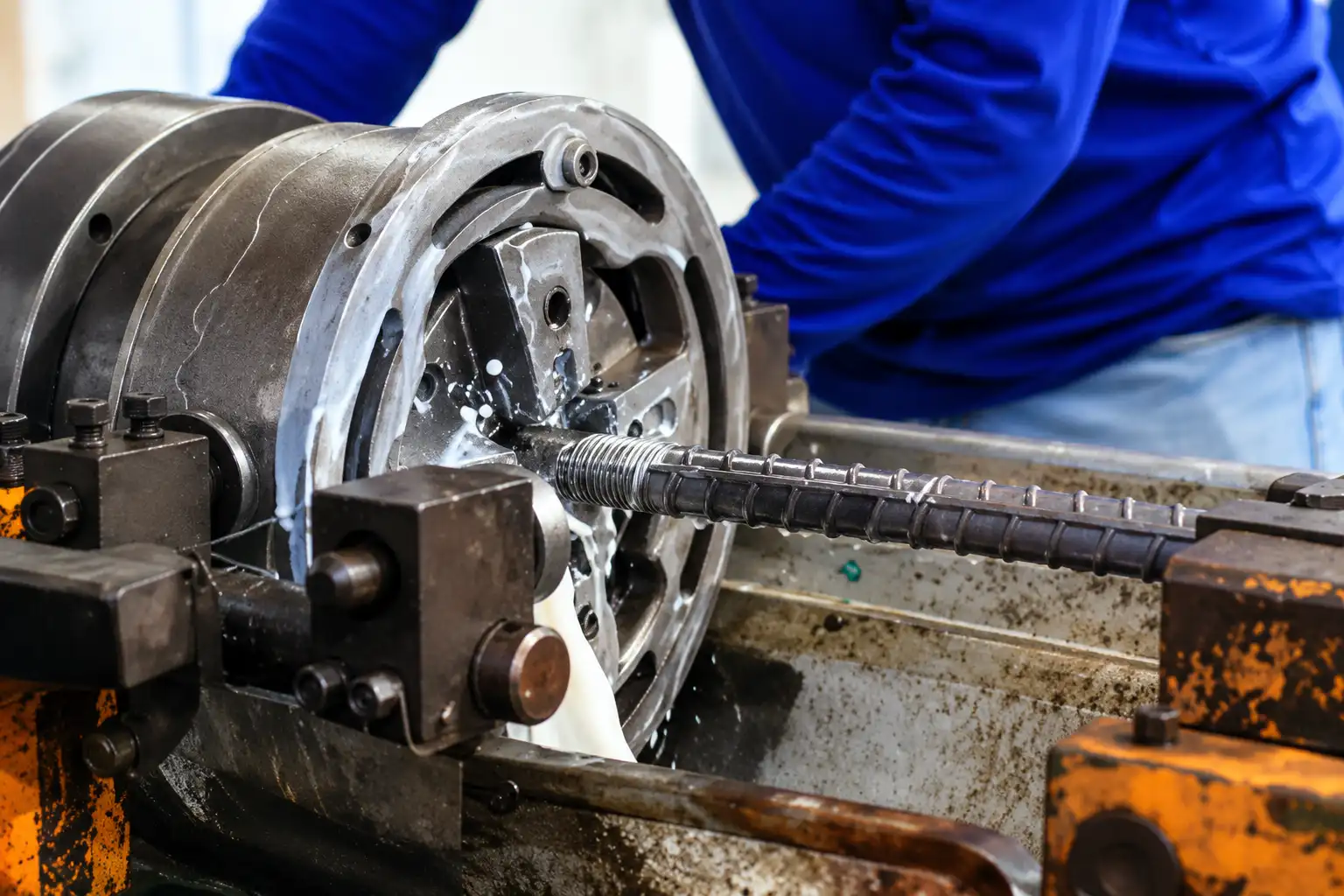
Three machines per site: Threading Machine, Forging Machine, Power Pack. Three steps. Precise parallel threads on every bar.
The end of the rebar is square cut using a special cutting machine to give a clean, perpendicular face before forging.
The rebar end is enlarged using cold upsetting dies - no reduction in cross-section through the threaded zone.
Parallel threads are cut into the enlarged end by rotating chasers, matched to coupler specification for each diameter.
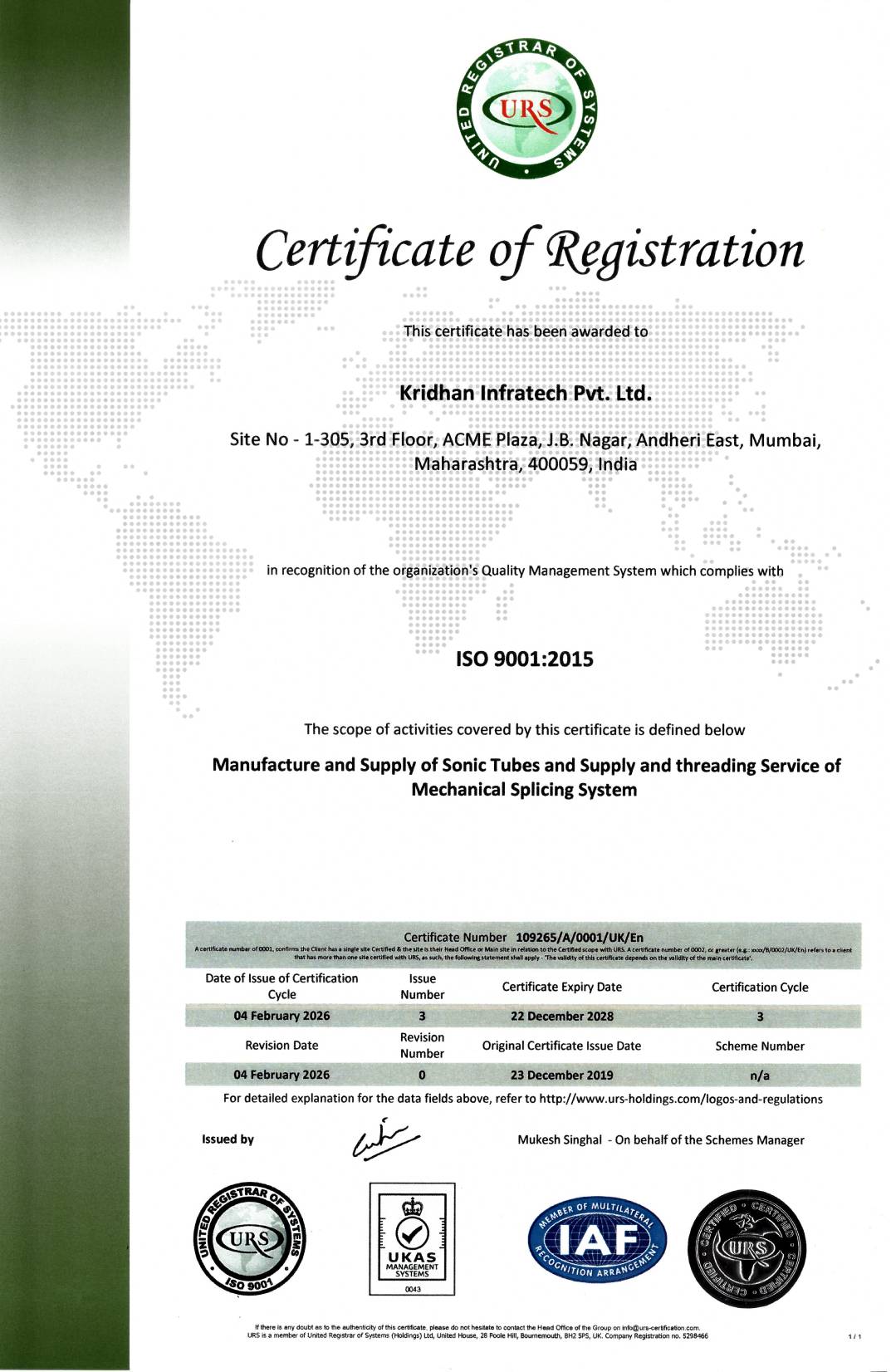
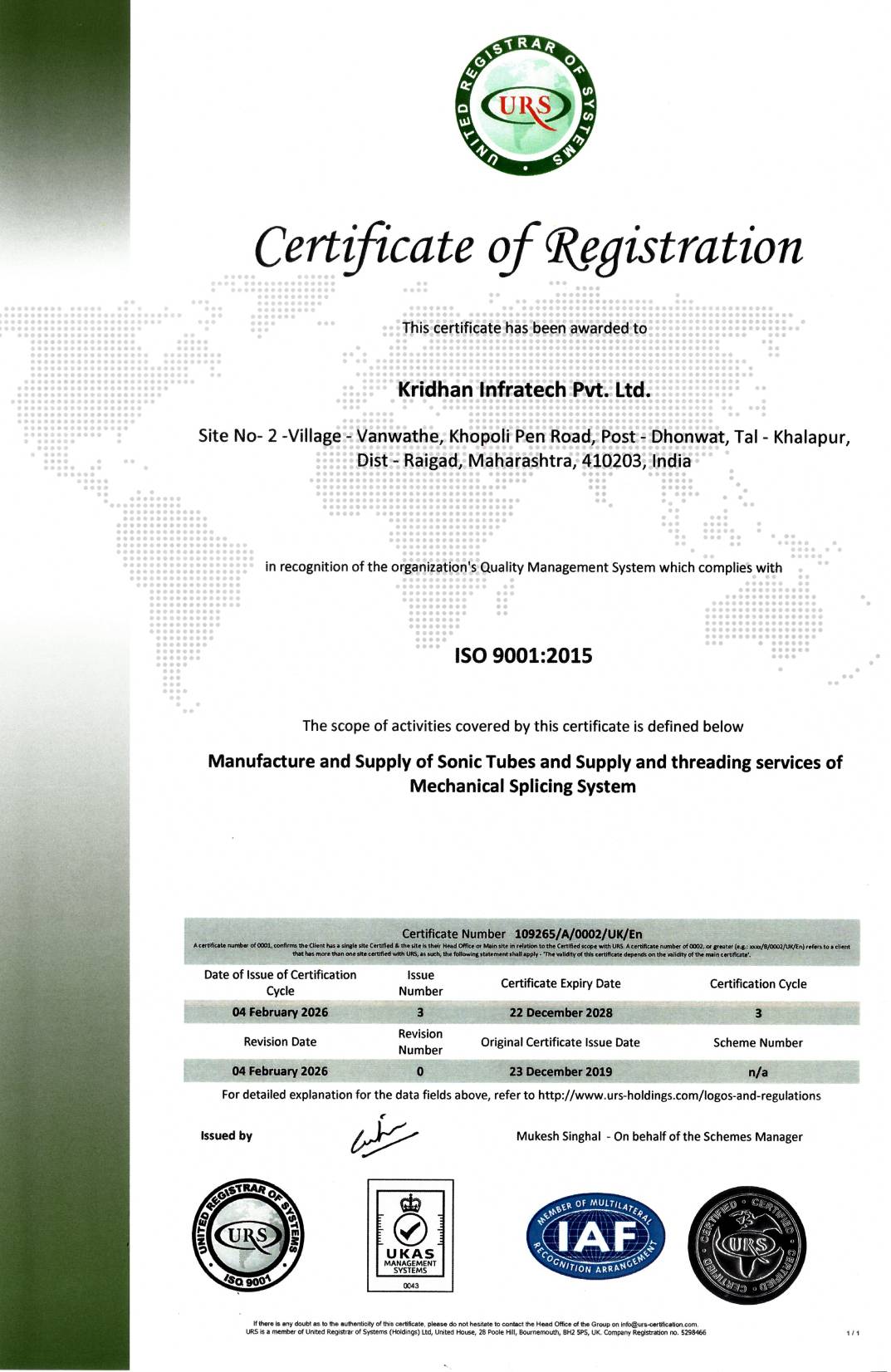
Kridhan is certified under ISO 19443:2018 and ISO 9001:2015 across both manufacturing sites — Mumbai and Khopoli.
Quality Management Systems for Organizations in the Nuclear Supply Chain
305, 3rd Floor, ACME Plaza, J.B. Nagar, Andheri East, Mumbai, Maharashtra, 400059, India
Village - Vanwathe, Khopoli Pen Road, Post - Dhonwat, Ta.Khalapur, Dist.Raigad, Maharashtra, 410203, India
Kridhan's Sonic Tube manufacturing operates under ISO-certified quality controls at our two facilities. MS pipes are procured from vendors developed to supply Cold Rolled ERW pipes of consistent wall thickness, then processed through 7 precision stages.
7-step process from raw ERW pipe to tested, gasket-fitted tube ready for dispatch.
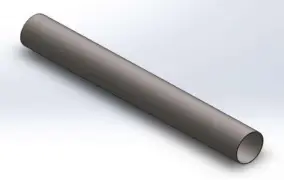
Sonic Tubes start as Mild Steel ERW pipe. Pipes are procured from vendors developed to supply Cold Rolled ERW pipes of consistent wall thickness.
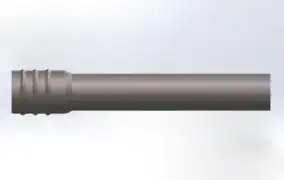
ERW pipes are flared using a special purpose machine to the desired dimensions. The flared portion then undergoes the Beading Process.
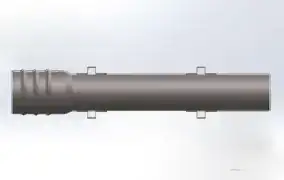
Fixing ears / lugs are spot welded on the surface of the pipes at appropriate distances to secure sonic tubes to the rebar cage.
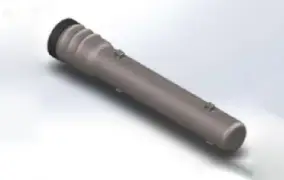
Sonic tubes are TIG Argon welded with an MS End Cap - used as the end pipe while installing the sonic tubes in the pile cage.
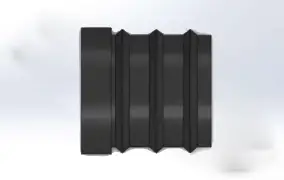
Rubber Gaskets are manufactured to fit the beaded portion of the sonic tube and create a push-fit, leak-proof joint during installation.
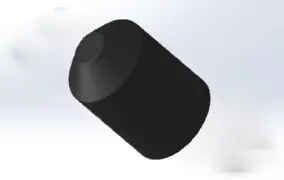
Rubber Top Cap covers the sonic tube assembly from the top - preventing debris or foreign material from entering the tube after installation.
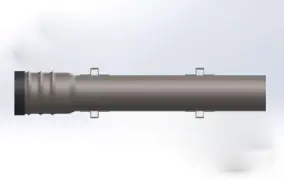
After manufacturing, sonic tubes are fitted with rubber gaskets and stored in the storage area, site-ready for dispatch.
Standard diameter tube for smaller diameter piles and closely spaced cage reinforcement.
Mid-range diameter used in most standard bored pile and foundation applications.
Large diameter tube for high-capacity piles requiring wider access for CSL probe insertion.
Three components - each engineered for a specific function during installation and CSL testing.
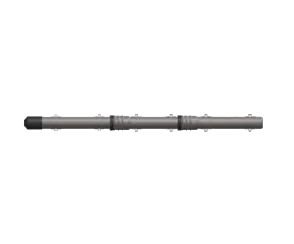
Complete tube unit with flared and beaded ends for seamless push-fit connection during installation. Supplied with gasket and top cap.
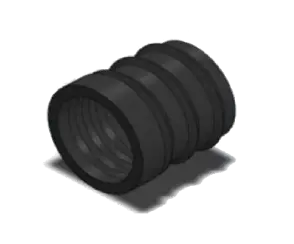
Watertight rubber seal fitted at each joint - push-fit mechanism prevents cement slurry ingress into the tube during concrete pour.
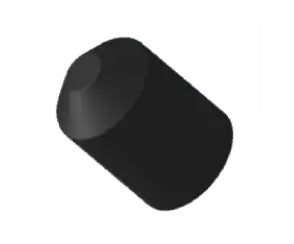
Protective cap fitted to the top open end of the tube after installation - prevents debris, cement, or water ingress before CSL testing commences.
Kridhan's business model embeds service directly into coupler supply. Each threading site is set up with three machines - Threading Machine, Forging Machine, and Power Pack - deployed and operated by Kridhan professionals.
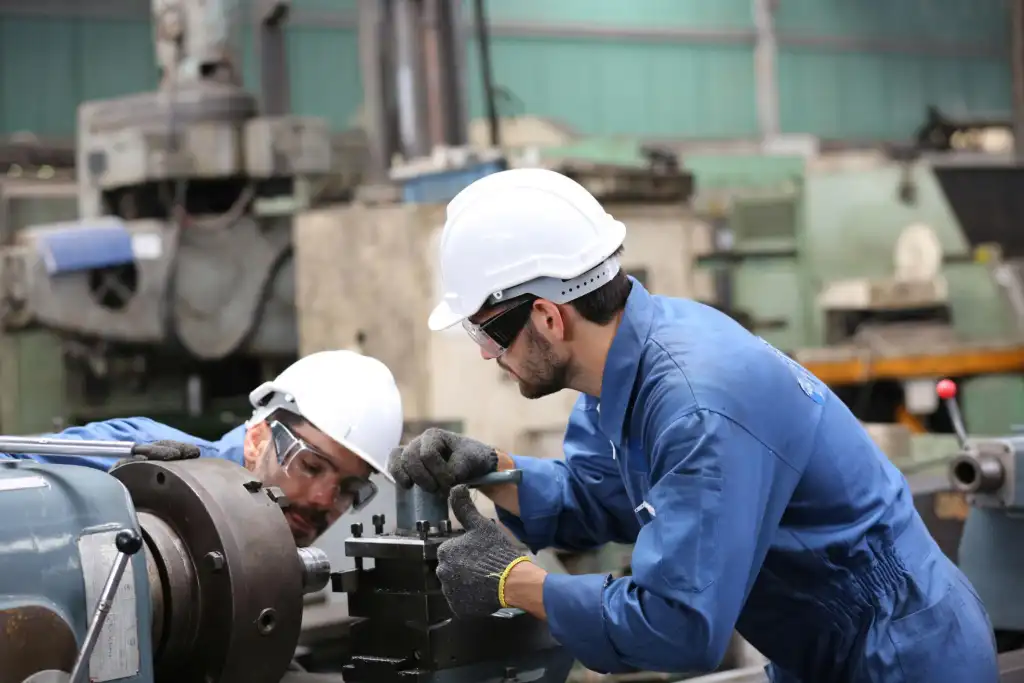
Square-cut the rebar end using the cutting machine for bar splicing. Clean face ensures optimal forging.
Proceed with cold forging at one end of the rebar using the forging machine to enlarge the cross-section.
Proceed with threading at the enlarged (forged) end. Quality check the threaded end before assembly.
Screw the coupler loosely by hand on one bar, leaving ¾ pitch to 1 pitch of rebar exposed outside the coupler.
Screw the second bar into the coupler by hand until contact is made at the joint face.
Tighten BOTH bars (not the coupler) with a pipe wrench to the specified torque to complete the structural joint.
Push-fit installation - no welding required at site. Six steps from bottom tube placement to pre-pour inspection.
Position the sonic tube with the welded end cap at the bottom of the reinforcement cage - end-cap side facing downward.
Secure the sonic tube assembly to the reinforcement cage using binding wires through the fixing ears.
Align the fixing ears properly. Install the subsequent sonic tube by push-fitting it into the rubber gasket to form a leak-proof joint.
Tie binding wires around the joint. Apply masking tape over both ends of the rubber joint for additional leak-proofing.
Repeat the procedure for each tube length. Cut the final top tube to the required length and install following the same method.
Fix the top rubber cap on the topmost tube. Inspect the complete assembly before lowering the cage into the bored pile.
Kridhan Couplers are manufactured in compliance with IS 16172, ACI 318, BS 8110, and ASME Section III Division 2. All third-party coupler testing is conducted at NABL accredited laboratories only.
Quality Management System certified to ISO 9001 - covering design, manufacturing, and delivery of rebar couplers and sonic tubes.
Registered under MSME. CIN: U28999MH2018PTC307010. PAC: AAHCK0242L.
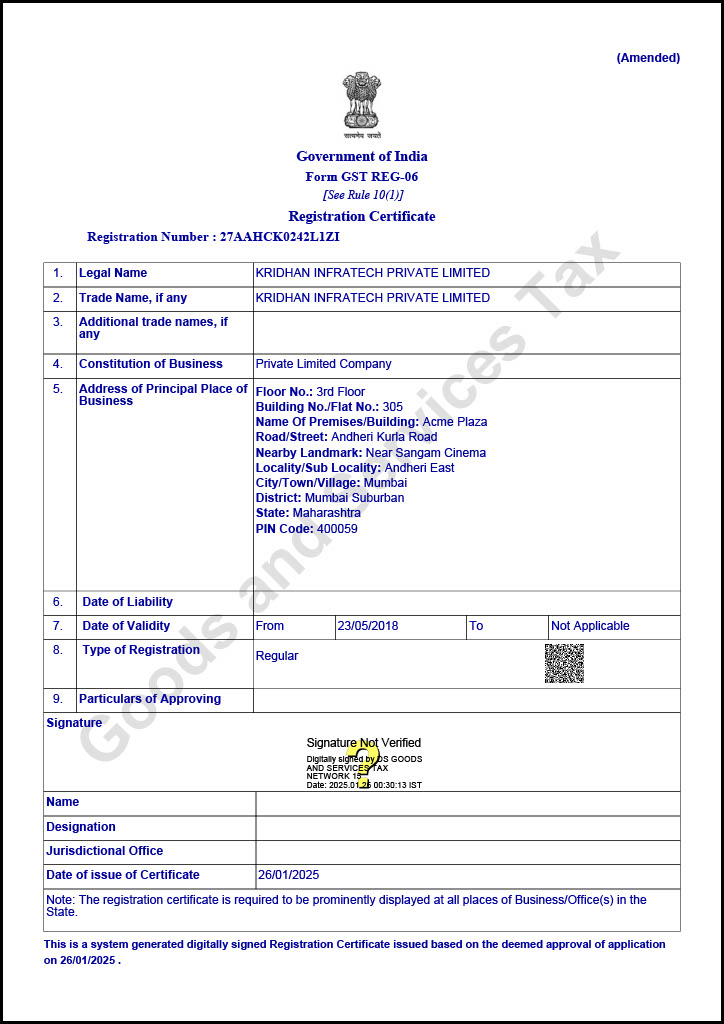
GSTIN: 27AAHCK0242L1ZI. Principal Place: 305 Acme Plaza, Andheri Kurla Road, Andheri East, Mumbai - 400 059.
Kridhan Sonic Tubes are approved and used by NHSRCL at extensive scale on the Ahmedabad-Mumbai Bullet Train Project.
Tests the ultimate tensile strength of the coupler joint under static axial load at NABL accredited laboratory.
Tensile test with 15% thread disengagement - simulating partial engagement field conditions.
Further disengagement scenario. Confirms adequate strength is maintained with 20% thread disengagement.
Measures relative slip between rebar ends under cyclic load - verifying mechanical splice maintains structural integrity.
Subjects the coupler to 100 cycles of reversed cyclic loading - qualifying for seismic applications.
Tests endurance under 10,000 load cycles for bridges, industrial floors, and dynamic load applications.


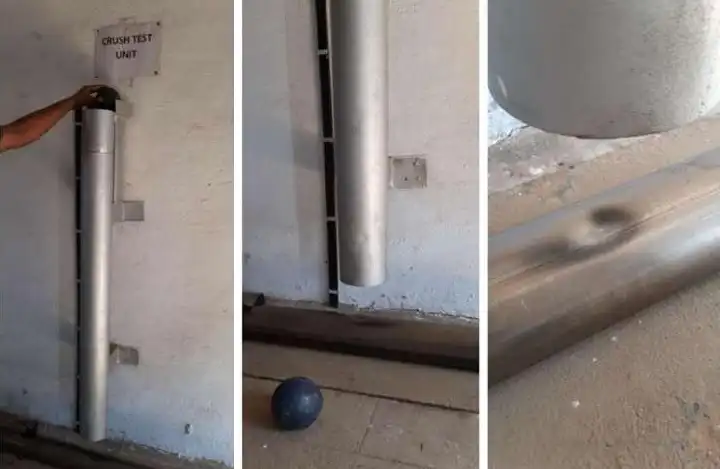
100% batch verification on all Sonic Tube production. In-house UTM, Hydrostatic Pressure Test Unit, and Crush Test Unit - plus third-party coupler testing at NABL accredited laboratories and Cross Hole Sonic Logging support.
UTM applies tensile load to assembled sonic tube joints, verifying the coupling connection exceeds the minimum pull-out force. Carried out on samples from every production batch.
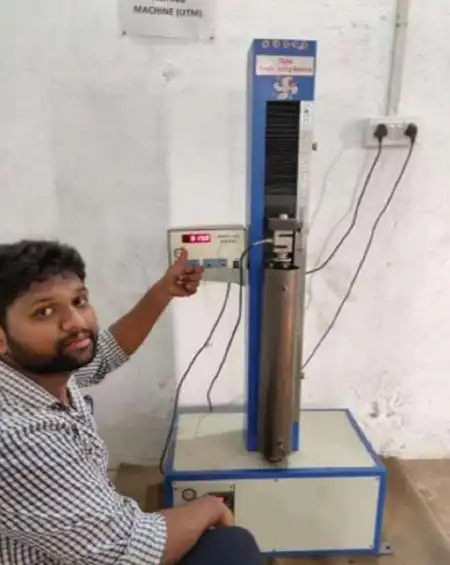
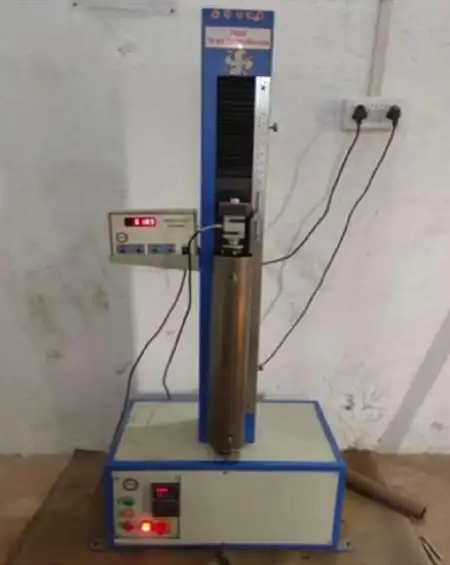
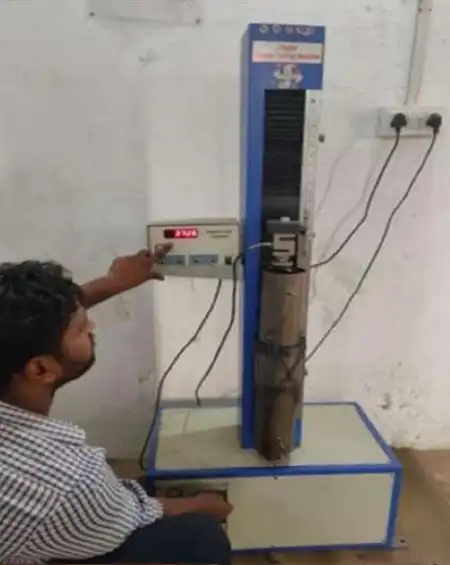
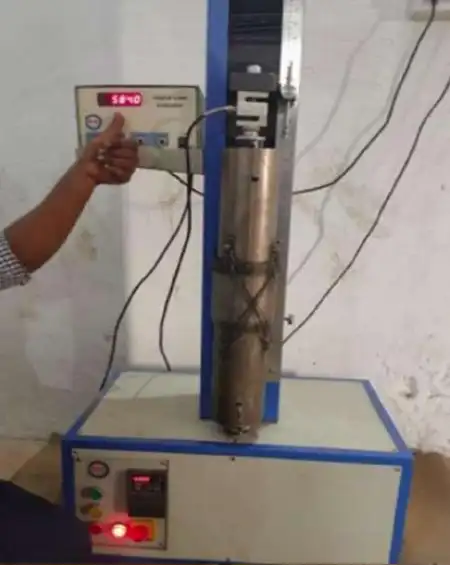
Confirms spot-welded ears retain sufficient pull-out strength under extraction loads experienced during pile cage installation and concreting.
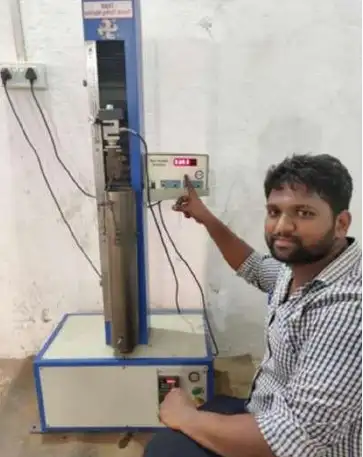
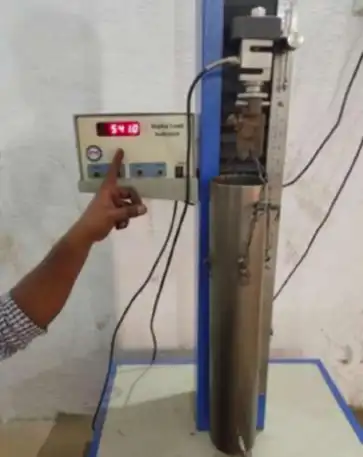
Each sonic tube batch is pressurised to confirm watertight integrity of tube body, joints, and gasket seal under pressures simulating concrete pour.
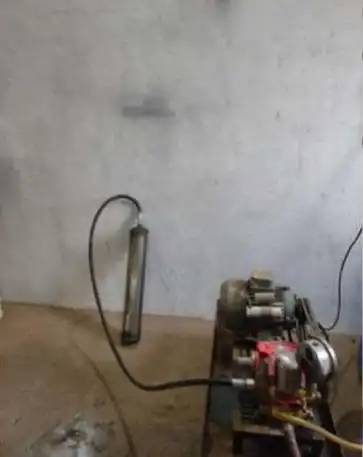
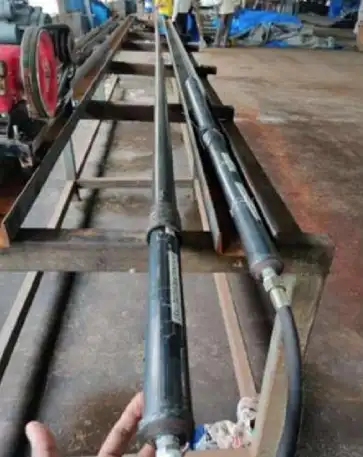
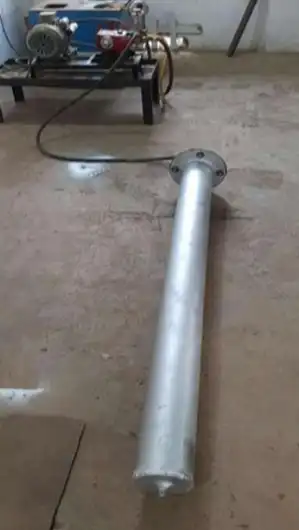
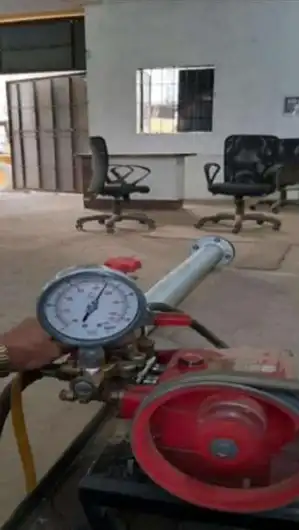
Tubes subjected to lateral crush load using the in-house unit - verifying rigidity and resistance to deformation under fresh concrete pressure during pile casting.
Sonic tubes are secured to the rebar cage using fixing ears and binding wires - no welding required at site.
Tubes connected by push-fitting into the rubber gasket. Masking tape applied over each joint for additional leak-proof sealing.
Rubber top cap fitted on the topmost tube. Full assembly inspected for alignment, secure fixing, and leak-proof joints before cage lowering.
Complete rebar cage with sonic tubes lowered into the drilled pile. Rubber gaskets prevent cement slurry ingress during concrete pour.
After concrete sets, ultrasonic transducers are lowered into two adjacent tubes. Signal transmitted and received across the pile cross-section to assess integrity.
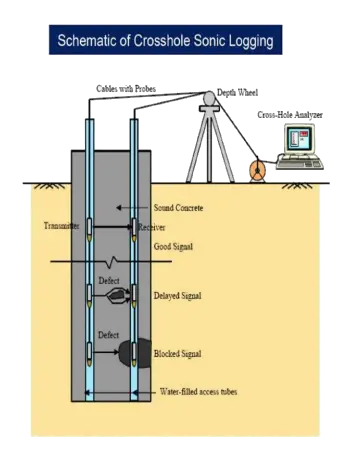
CSL integrity testing allows evaluation of concrete integrity and homogeneity within the shaft area. Results determine the location and severity of potential shaft anomalies. CSL is a quick test that has no depth restrictions - making it ideal for large-diameter, deep bored piles.
Tests the ultimate tensile strength of the coupler joint under static axial load at NABL accredited laboratory.
Tensile test with 15% thread disengagement - simulating partial engagement field conditions.
Further disengagement scenario. Confirms adequate strength is maintained with 20% thread disengagement.
Measures relative slip between rebar ends under cyclic load - verifying mechanical splice maintains structural integrity.
Subjects the coupler to 100 cycles of reversed cyclic loading - qualifying for seismic applications.
Tests endurance under 10,000 load cycles for bridges, industrial floors, and dynamic load applications.